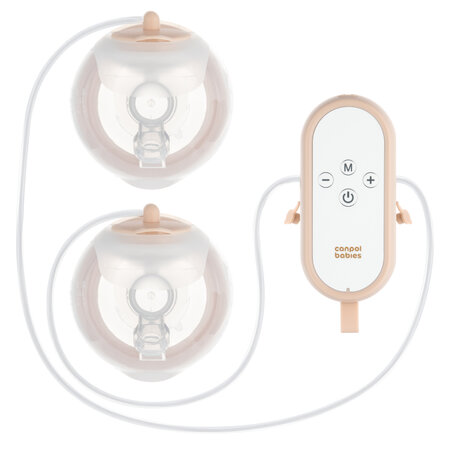
Canpol babies Spare Parts for the HandsFree 2.0 Breast Pump
Symbol: 20/128


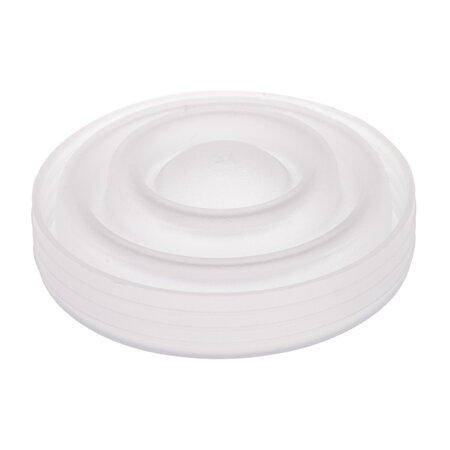
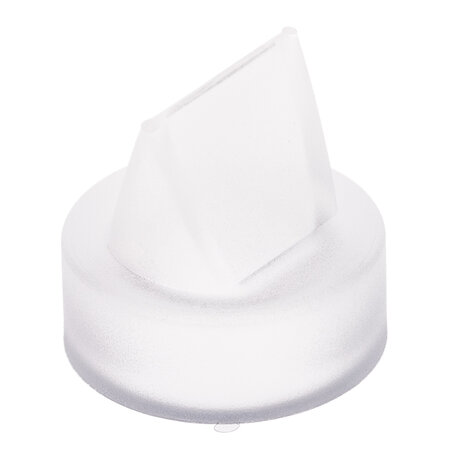
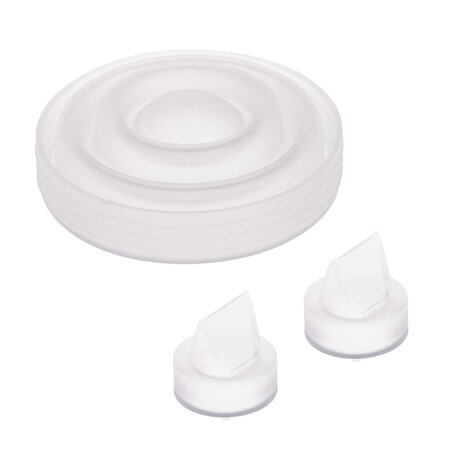
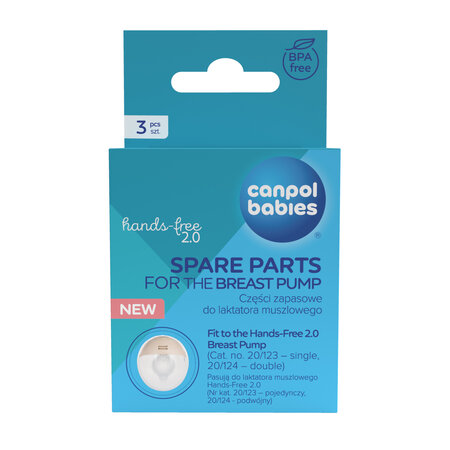
Canpol babies Spare Parts for the HandsFree 2.0 Breast Pump
Symbol: 20/128Spare parts for the Hands-Free 2.0 wearable breast pump are a practical set of components designed to replace worn parts and ensure the breast pump continues to function properly. The set includes a silicone membrane and two anti-return valves – components essential for the proper operation of the breast milk expression system.
Silicone parts that come into contact with breast milk can be disinfected in an electric steriliser.
The set includes: 1 silicone membrane and 2 anti-return valves. Detailed instructions for replacing and cleaning the parts can be found in the user manual supplied with the Hands-Free 2.0 wearable breast pump.
Disassemble the breast pump components. Before first use and after each use, wash all parts that come into contact with breast milk in warm water with a mild detergent, then place them in boiling water for 5 minutes to ensure proper hygiene. Dry all parts thoroughly before use. Silicone parts that come into contact with breast milk can be disinfected in an electric steriliser.
CAUTION! The breast pump motor unit and USB cable must not be washed or disinfected in water. To clean them, wipe with a dry cloth.
Detailed instructions for replacing and cleaning the parts can be found in the user manual supplied with the Hands-Free 2.0 wearable breast pump.
Read the entire instruction manual carefully before use.

Regardless of whether you are weaning the baby for health reasons, because of work, school, lack of strength for breastfeeding, or because the toddler is too big for it, it is a very difficult decision for both you and the baby.
Read more >
During pregnancy, your breasts already produced food in the form of colostrum, but it was only after the birth of the child that the body launched the so-called "lactation control function".
Read more >
You must have heard people say that it is difficult to breastfeed after a c-section as there is no milk in the breasts. Nothing could be further from the truth. A signal that triggers your body to produce milk is when a placenta is discharged and this happens both during vaginal and Cesarean birth, just in a slightly different way.
Read more >